
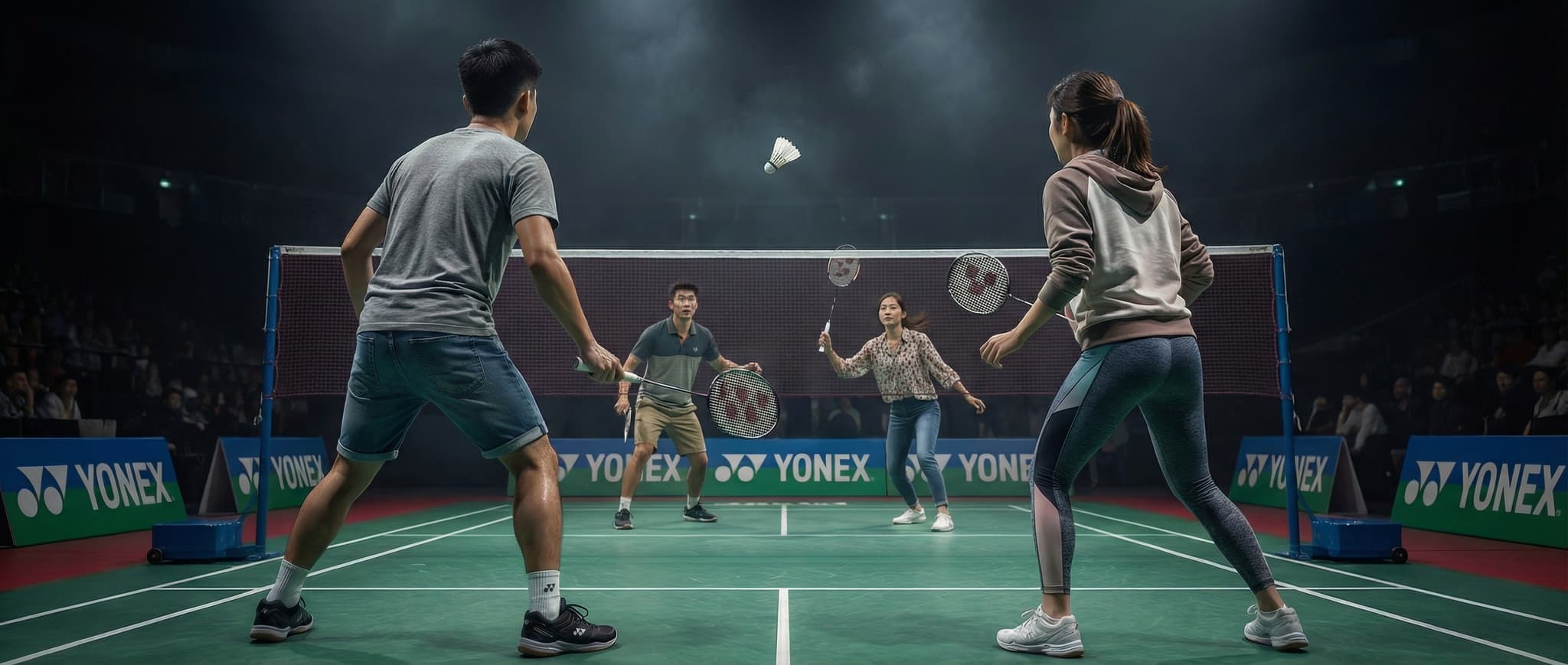
How to Run a Fair Badminton Session: Court Rotation, Team Balancing & Scoring
If you've ever organised a social badminton session, you know the drill. The WhatsApp group explodes with "who's coming tonight?", someone arrives late and expects to jump straight on court, and halfway through the evening the same two players have barely sat down while others have been waiting three games in a row. Sound familiar?
Running a fair badminton session is harder than it looks. With doubles requiring exactly four players per court, managing rotations, sit-outs, and team balance becomes a genuine logistical challenge, especially once you have more than eight people. This guide covers everything you need to organise sessions that keep everyone happy, from simple rotation systems to digital tools that automate the whole process.
The Problem with Traditional Court Rotation
Most badminton clubs and social groups rely on some version of the peg board system. Players put their name peg on a board when they want to play, and the next four pegs in line form the next game. It's simple, visible, and has been the default for decades.
But peg boards have real problems. Aggressive players who rush to move their peg get more court time. There's no record of who has played with whom, so the same pairings keep repeating. Stronger players tend to dominate because there's no mechanism for balancing teams. And if someone steps away to get water or use the bathroom, they can lose their spot in the queue without realising.
The fundamental issue is that peg boards track queue order, not fairness. They don't account for how long each player has actually been on court, whether someone has sat out three times in a row, or whether the resulting matchups produce competitive games. For a casual hit with four mates, none of this matters. For a regular social session with 12 or more players, it matters a lot.
How Many Courts Do You Need?
Before worrying about rotation systems, get the court-to-player ratio right. Too many players per court means excessive waiting; too few means you're paying for empty courts. Here are some rough guidelines for doubles-focused sessions:
- 4-6 players: 1 court. Minimal waiting, simple rotation.
- 8-10 players: 2 courts. Comfortable rotation with short sit-outs.
- 10-14 players: 2-3 courts. Good balance of play time and rest.
- 14-18 players: 3-4 courts. Requires structured rotation to stay fair.
- 18+ players: 4+ courts. Manual tracking becomes very difficult at this scale.
The sweet spot for most social sessions is roughly 5-6 players per court. This gives everyone regular games with enough rest between them. Once you exceed 7 players per court, sit-out times start to feel too long and frustration creeps in.
Fair Rotation Systems for Different Group Sizes
4-6 Players on 1 Court
With just one court and four to six players, rotation is straightforward. If you have exactly four, everyone plays every game. With five or six, one or two players sit out each round. The simplest fair approach is "winners stay, losers rotate", but this rewards stronger players with more court time, which isn't ideal for mixed-level groups.
A better approach for small groups is a fixed rotation where the two players who have been off court the longest come on, regardless of who won or lost. You can pair them with different partners each round to keep things varied. With six players, each person plays two games then sits out one, which creates a natural and fair rhythm.
8-12 Players on 2 Courts
This is where things start to get complicated. With two courts running simultaneously, you need to coordinate eight players on court while managing a queue of two to four waiting. The challenge is ensuring that the waiting players get allocated evenly and that partners change regularly.
A common system is to number all players and follow a pre-set rotation chart. This works well when everyone arrives on time, but falls apart as soon as someone turns up late, leaves early, or needs to take a break. The organiser ends up doing mental arithmetic in real time, which is stressful and error-prone.
Another approach is the "next two off" method: after each game finishes, the two players from the losing team join the queue and the two longest-waiting players come on with the winners. This keeps things moving but can still create unbalanced matchups.
12+ Players on 3+ Courts
Once you cross a dozen players across three or more courts, manual rotation tracking effectively breaks down. No one can keep track of who has played how many games, which pairings have already happened, or who has been sitting out the longest. Arguments start, cliques form, and the organiser spends more time managing the whiteboard than actually playing.
At this scale, you really need either a dedicated rotation coordinator who doesn't play, a printed rotation schedule prepared in advance (which only works if you know exactly who's coming), or a digital tool that handles the logistics automatically. Most organisers eventually land on the third option because the first two aren't sustainable.
Team Balancing: Keeping Games Competitive
Fair rotation is only half the equation. Even if everyone gets equal court time, the session won't feel fair if the same strong pair dominates every game 21-5. Team balancing (pairing stronger players with weaker ones to create competitive matchups) is what makes sessions genuinely enjoyable for everyone.
The simplest balancing method is to roughly rank players by ability and ensure each game pairs a stronger player with a weaker one on each side. In practice, most organisers do this intuitively for small groups, but it becomes impossible to do consistently with 12 or more players across multiple courts.
Another important aspect is partner variety. Playing with the same partner every week gets stale. Good session management rotates partners so everyone experiences different playing styles and combinations. This also helps weaker players improve because they learn different things from different partners.
For mixed-level sessions, consider these principles:
- Pair strong and weak players together on each team rather than stacking one side
- Avoid repeating the same partnership in consecutive games
- If possible, track cumulative scores to identify players who are consistently on lopsided teams
- Be transparent about the balancing approach. Players appreciate knowing the system is fair
Score Tracking and Why It Matters
Many social sessions don't bother tracking scores beyond the current game, but there are good reasons to keep a running record. Score tracking creates a sense of accountability and healthy competition. It helps identify whether the rotation system is actually producing balanced games. And let's be honest, it settles the "who's buying shuttles this month" debate.
Cumulative scores also provide useful data for team balancing. If one player is winning 80% of their games, they're probably being under-challenged, and the rotation algorithm (or organiser) can adjust pairings accordingly. Conversely, if someone is losing every game, they might benefit from being paired with a stronger partner.
Score tracking doesn't need to be elaborate. Even recording just the winning team and margin for each game gives you enough data to spot patterns. The key is making it easy enough that someone actually does it, which is where clipboards get abandoned and phones come in handy.
The Digital Peg Board Approach
The problems with manual rotation (unfair sit-outs, repeated pairings, imbalanced teams, no score history) all have the same root cause: they require a human to track too many variables in real time. Digital tools solve this by letting an algorithm handle the logistics while the organiser focuses on playing.
A good digital rotation system should track how many games each player has played, ensure sit-outs are distributed evenly, vary partnerships across rounds, and balance teams by approximate skill level. It should also handle the messy reality of social sessions: players arriving late, leaving early, or sitting out a round by choice.
Tools like MetroBadminton Play automate the entire process. Create a game page, add players, and let the algorithm handle fair court rotations. No app download needed, works on any phone. The organiser shares a link, players join, and the system generates balanced matchups round by round.
The real advantage of digital tools isn't just convenience, it's transparency. When everyone can see the rotation logic and their own stats, there's no room for accusations of favouritism. The algorithm doesn't have mates it wants to play with.
Tips for Session Organisers
Whether you're using a peg board, a spreadsheet, or a digital tool, these practical tips will help your sessions run smoothly:
- Communicate the rotation rules upfront. Post them in the group chat before the session so everyone knows what to expect.
- Use a timer for games (15 minutes or first to 21, whichever comes first) to keep rotations moving and prevent one court from holding everyone up.
- Handle latecomers gracefully. Slot them into the next available rotation rather than making them wait until a "natural" break.
- Track who's sitting out and prioritise them for the next game. This is the single biggest source of frustration in social sessions.
- Ask for feedback regularly. If players feel the system is unfair, listen and adjust rather than defending the process.
- Assign a backup organiser in case you can't make it. Sessions that depend on one person tend to collapse when that person is unavailable.
- Keep a consistent schedule. Weekly sessions at the same time and place build a reliable group over time.
Frequently Asked Questions
How do you rotate players fairly in badminton doubles?
The fairest approach is to track each player's total games played and prioritise those who have played the fewest for the next round. Within each round, vary the partnerships so no one plays with the same partner consecutively. For small groups (under 8), a simple fixed rotation chart works well. For larger groups, a digital rotation tool removes the guesswork and ensures no one is accidentally overlooked.
What is a badminton peg board?
A peg board is a physical board, usually mounted on a wall at a badminton club, where players place a named peg to indicate they want to play. The next four pegs in line form the next game. It's a simple queuing system that has been used in clubs for decades. While easy to understand, peg boards don't account for team balance, partner variety, or fair distribution of sit-outs, which is why many organisers are moving to digital alternatives.
How many players can you have in a badminton session?
There's no hard limit, but the practical ceiling depends on how many courts you have. A good rule of thumb is 5-6 players per court for doubles sessions. With one court, 4-6 players is ideal. Two courts comfortably handle 8-12. Three courts can manage 14-18. Beyond that, you'll need a robust rotation system (ideally digital) and possibly a dedicated coordinator to keep things running smoothly.
Is there a free tool for badminton court rotation?
MetroBadminton Play is a free browser-based tool designed specifically for this purpose. You create a session, add your players, specify the number of courts, and the system generates fair rotations automatically. It tracks games played, manages sit-outs, and records scores, all from a shared link that works on any device. No sign-up or app download required.
Related Articles

Badminton Rules Explained: A Beginner's Guide to Scoring and Court Play

Badminton Strategy: Key Differences Between Singles and Doubles Play